How to Transport Balloons Without Damage: A Practical Guide
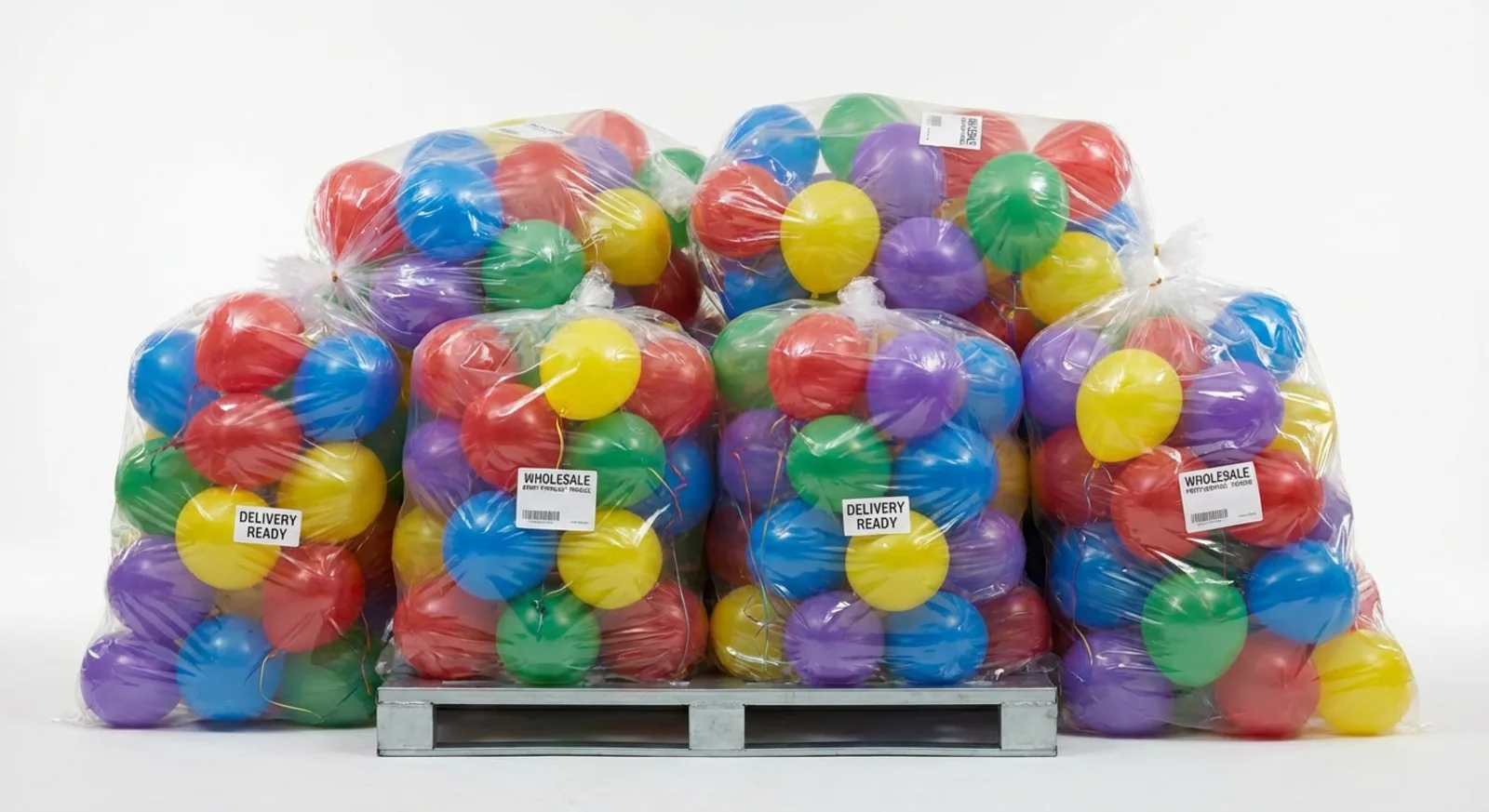
Picture this: you’ve inflated 150 latex balloons, carefully packed them into the car, driven to the venue — and a third of them are already flat on the floor. Sound familiar? Transporting balloons looks simple until you actually try it.
Here’s what actually works.
Latex vs Foil: Different Rules
Latex balloons are vulnerable to friction, sharp surfaces, and heat. Foil balloons are sensitive to pressure and creasing. They need to be transported differently.
Latex:
- Keep away from rough surfaces (bare car boot floor, untreated wood)
- Don’t overpack the space — compressed balloons will pop on their own
- Keep away from heat sources: near the exhaust pipe or under direct sunlight through glass, 10 minutes is enough
Foil:
- Don’t fold them — valves and seams lose their seal
- When stacking, don’t put anything heavy on top
- Shaped balloons (stars, hearts, characters) travel better upright
Temperature Is the Main Enemy
Cold shrinks, heat bursts. Both ruin the result.
Below +5°C, a latex balloon visibly “deflates” — the helium contracts. Bring it into a warm room and it will recover. But a client in a cold venue will see half-flat balloons and lose faith before the event even starts.
In heat (+30°C and above), latex expands and pops. In summer, a car parked in direct sunlight becomes an oven in 20 minutes. That’s an honest 10–20% loss right there.
The practical takeaway: never leave balloons in a sealed car in the sun, and in cold weather — keep them in the cabin, not the boot.
Balloon Transport Bags: How It Works
A balloon transport bag is a large transparent polyethylene bag measuring 2050×1050 mm, which holds around 20 latex balloons at 30 cm (12”) diameter. The idea is simple: balloons inside don’t rub against surfaces, don’t scatter around the car, and don’t tangle in their ribbons.
How many balloons fit:
- Latex 30 cm (12”) — around 20 per bag (bag size: 2050×1050 mm)
- Latex 25 cm (10”) — up to 30
- Foil 45 cm — 8–12, depending on shape
The bag ties shut or clips closed. Multiple bags become multiple “blocks” that are easy to load into a car or carry through a lift.
For regular work, this changes the whole logic: instead of chaotic piles in the cabin, you load 3–4 tight blocks that don’t scatter, tangle, or get crushed.
Transport bags in our catalogue →
Loading: What to Do and What to Avoid
A few rules that save headaches:
Do:
- Load bags vertically, not on their sides
- Put a soft blanket or foam mat under the bags — it reduces friction with the floor
- In vans, use roof straps or a cargo net
- Close the windows: a gust of wind through an open window while moving is a guaranteed pop
Don’t:
- Put tool bags, pumps, or canisters on top of the balloons
- Blast air conditioning directly onto the bags
- Open the boot in the wind before you’re ready
Long Trips: A Special Case
If you’re transporting balloons for more than 30–40 minutes, keep an eye on temperature throughout the journey.
In winter: let the car warm up before loading. Balloons that have “shrunk” in the cold will recover in warmth within 10–15 minutes — build that time into your schedule.
In summer: avoid direct sun on the windows, don’t leave the car sealed.
Ribbons and Weights: Small Details That Matter
Tie the ribbon immediately after inflating, not right before you leave.
Balloon weights go in a separate bag — not with the balloons. Hard plastic + balloons = losses.
The Bottom Line
Transporting balloons is about organisation, not luck. Most losses happen for three reasons: heat, friction, and pressure. Transport bags take friction out of the equation — temperature control is your side of the deal.
If you work with balloons regularly, keeping a stock of transport bags pays for itself quickly in time saved and losses avoided.